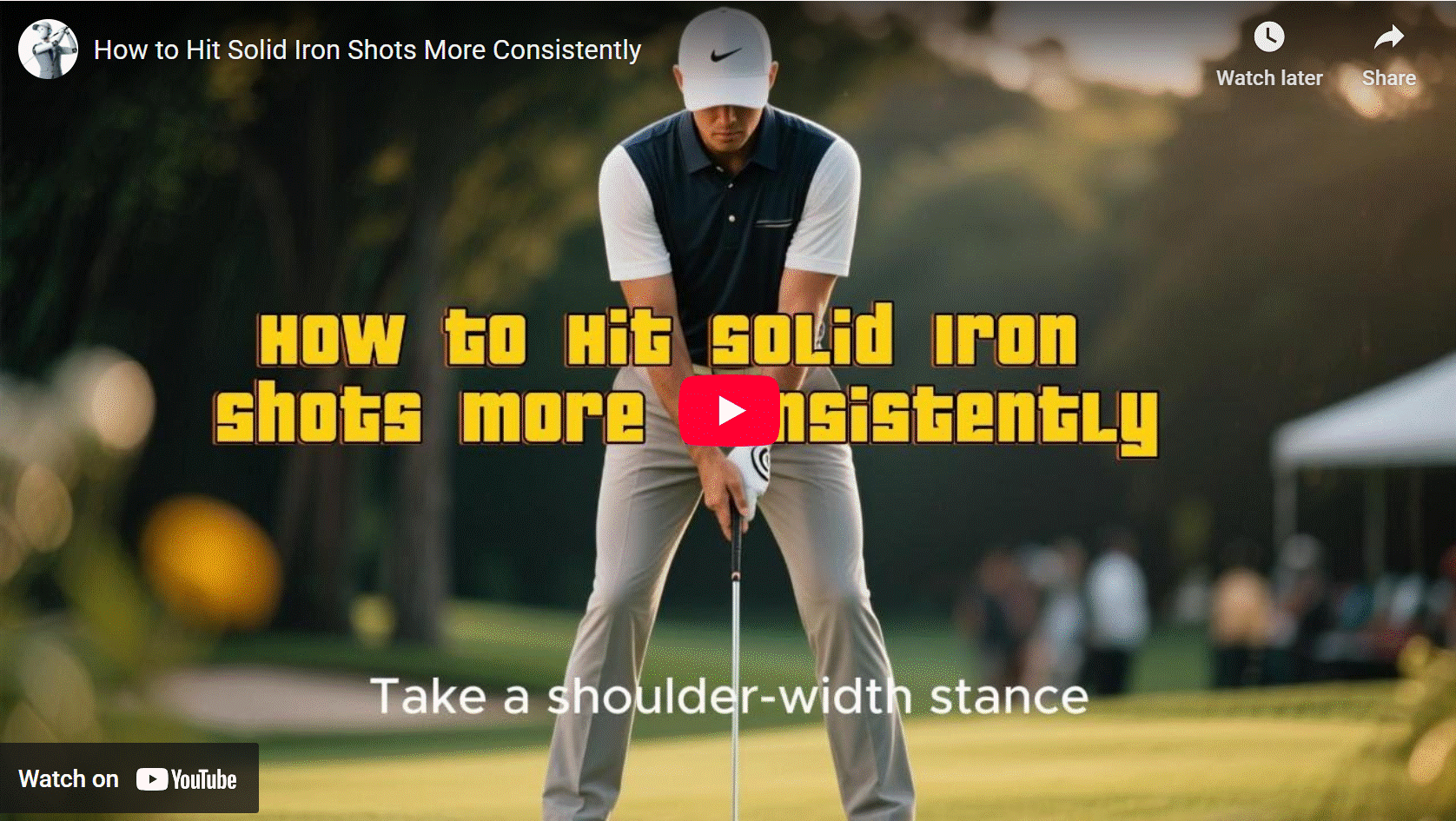

The golf grip is the only connection you have to the club, yet it’s one of the most misunderstood fundamentals in the game. Many amateurs struggle with inconsistent contact, weak shots, or unwanted curvature simply because their grip makes it impossible to control the clubface.
⛳ Watch Video Below ⛳
The correct golf grip isn’t about strength or squeezing the club. It’s about positioning your hands so the clubface can return to square naturally.
Start with your lead hand. Place the grip diagonally across your fingers, not deep in the palm. When you look down, you should see two to three knuckles on the back of your lead hand. This position allows the wrist to hinge properly and helps square the clubface through impact.
Next, place your trail hand so the palm covers the lead thumb. The lifeline of your trail hand should rest on top of that thumb, creating a unified grip. Your trail hand should sit slightly more underneath the grip, not on top of it. This helps the hands work together instead of fighting each other.
Grip pressure is just as important as hand position. Most amateurs grip the club too tightly, especially with the trail hand. The correct grip pressure should feel firm but relaxed, allowing the wrists to move freely. Excess tension restricts motion and leads to inconsistent strikes.
There are three common grip styles: overlapping, interlocking, and ten-finger. While all can work, most amateurs benefit from an overlapping or interlocking grip because they promote better hand connection and control. The key is consistency, not constantly switching grip styles.
A proper grip also influences ball flight. A grip that’s too weak often causes slices and weak shots. A grip that’s too strong can lead to hooks. Finding a neutral grip allows the clubface to square naturally without manipulation.
To practice, grip the club correctly and make slow practice swings while focusing on keeping the grip pressure light and consistent. Over time, this grip will feel natural and improve both contact and accuracy.
When you learn the correct golf grip, the swing becomes simpler. Many swing flaws disappear because the clubface no longer needs to be forced into position. A proper grip is one of the fastest ways to improve your ball striking and consistency.

Kevin Collier is an avid golfer and contributing author at AIGolfTips.com, where he shares his passion for the game through expert tips, techniques, and gear reviews. With years of experience on the course, Kevin offers valuable insights for golfers of all skill levels, helping them improve their game and maximize their potential. Whether discussing swing mechanics or the latest in golf technology, Kevin’s engaging approach aims to inspire and educate fellow golf enthusiasts to elevate their performance and enjoy every moment on the green.